Low-cost AI Overview trackers for small agencies begin at roughly $29 monthly, while standard monitoring for Google AI Overviews, ChatGPT, Perplexity, and other answer engines generally runs $29–$99 per month, according to August 2026 listings. Prompt capacity, rather than listed price, determines whether a plan can support multiple clients. Sona AI Visibility extends beyond monitoring by linking tracked prompts and citations with pipeline and revenue.
What does an affordable AI Overview tracker actually do for a small agency?
Affordable AI Overview trackers for small agencies monitor whether client brands appear in Google AI Overviews and other AI answers for a recurring prompt list. They turn questions such as “best payroll software for startups” into reports on brand mentions, cited pages, competitor presence, and changes over time.
The core job is monitoring. Meaningful differences include engine coverage, daily prompt capacity, client workspaces, reporting controls, and whether the platform connects visibility with commercial outcomes.
- Prompt coverage: A plan with 15 daily prompts supports a narrow client watchlist. A plan with 100 or more supports category, comparison, and high-intent prompts.
- Engine coverage: Google AI Overviews matter for many SEO retainers, while ChatGPT, Perplexity, Gemini, Claude, and other answer engines matter when clients receive research traffic from several surfaces.
- Agency operations: Separate workspaces, client-level reporting, white-label reports, and user access determine whether an agency can manage multiple accounts from one subscription.
- Measurement depth: Sona AI Visibility adds AI search attribution on Growth or above, while also supporting prompt and citation monitoring.
A tracker should produce a repeatable record, not a one-off score. A score captures one date. Operational value comes from comparing the same prompt set over time and identifying the client page, topic, or source relationship that needs attention.
How much do affordable AI Overview trackers cost for small agencies in 2026?
Small-agency AI visibility monitoring starts at $29 per month in the published plans below. Agency-oriented plans range from $189 to $500 per month for broader client capacity or white-label reporting, as of October 2026. Price alone is incomplete because daily prompt capacity and answer-engine coverage vary materially.
The comparison separates entry pricing from agency plans, tracked engines, prompt allowances, and the derived cost per daily tracked prompt using a shared denominator. A lower subscription price can still constrain an agency that needs separate client prompt lists.
| Tool | Starting price | Agency Plans? (Yes/No) | # of Answer Engines Tracked | Answer Engines | # of Daily Tracked Prompts (entry plan) | Cost per Daily Tracked Prompt | Differentiation |
|---|---|---|---|---|---|---|---|
| Sona AI Visibility | From $75/month, billed annually, as of October 2026 | Yes | 11 | Not published | 5,000 credits/month, about 166 daily tracked prompts on one model or 56 across three | $0.45 per daily tracked prompt | Growth adds AI search attribution for measuring AI search activity alongside business outcomes. |
| Peec AI | From $95/month, as of October 2026 | Yes | 3 | Not published | 50 prompts daily | $0.63 per daily tracked prompt | AI visibility monitoring across a self-serve and agency plan structure. |
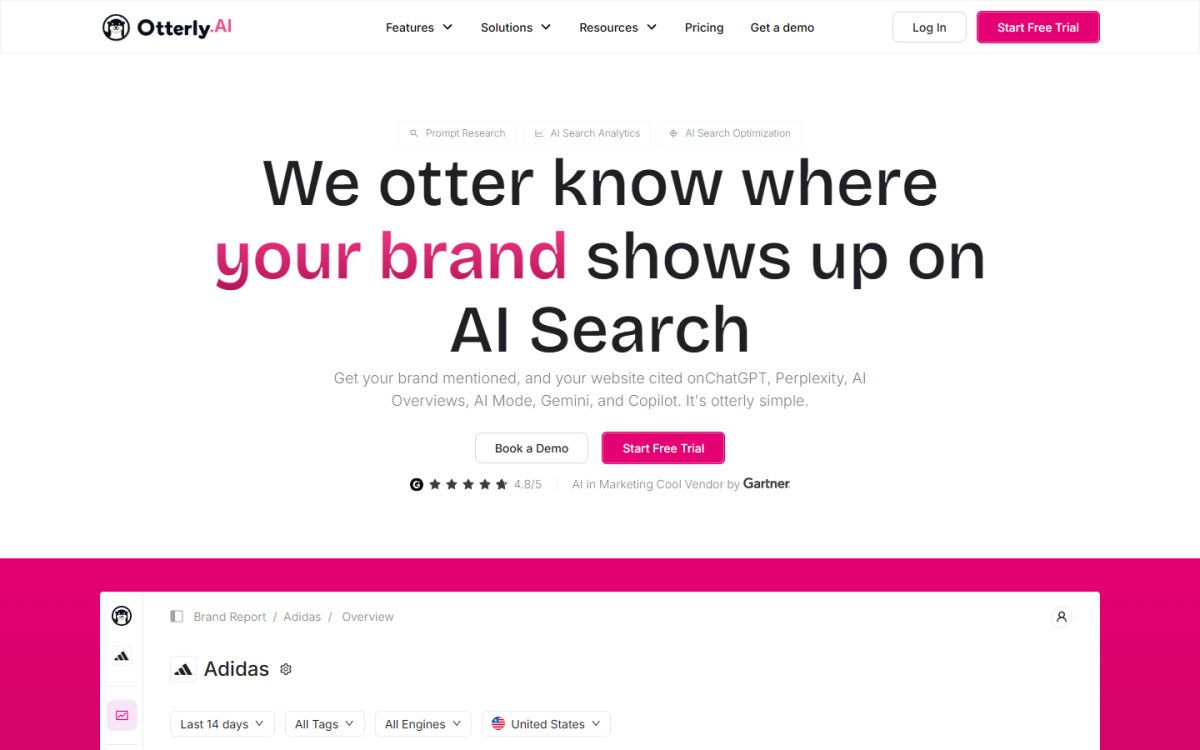
| Otterly.ai | From $29/month, as of October 2026 | Yes | 4 | ChatGPT, Google AI Overviews, Perplexity, Microsoft Copilot | 15 prompts daily | $0.48 per daily tracked prompt | AI search monitoring with entry, Standard, and Premium plan tiers. |
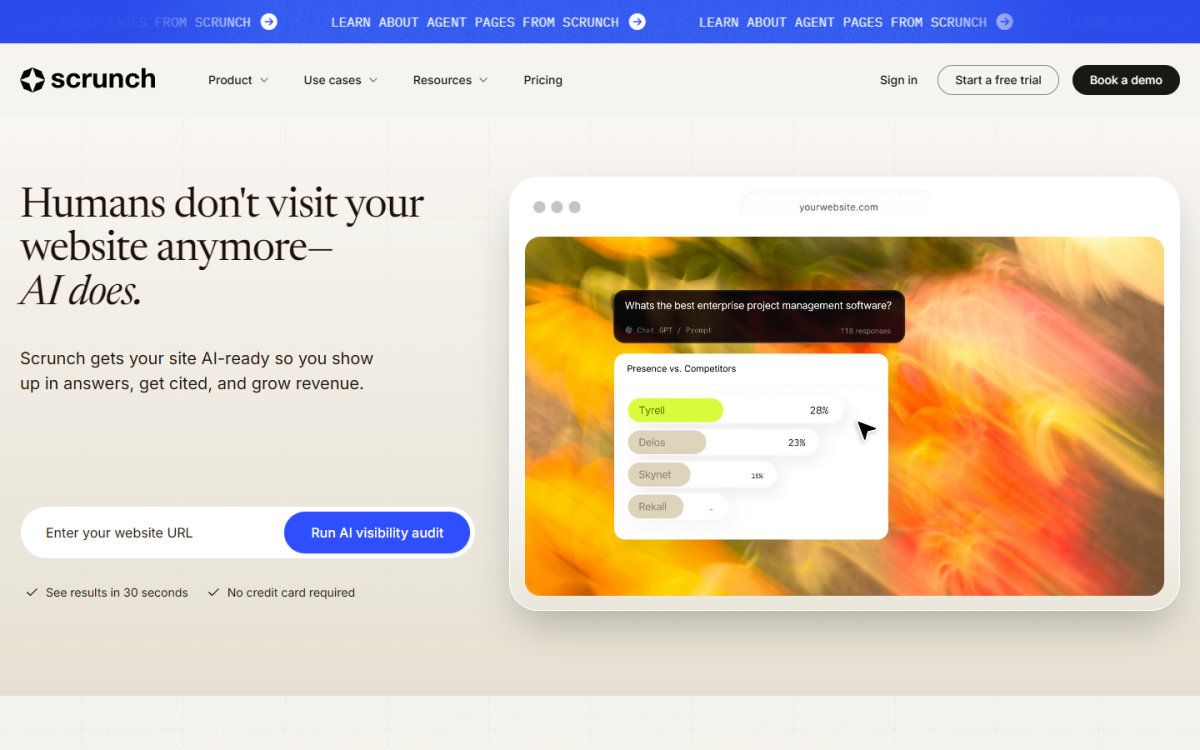
| Scrunch AI | From $250/month, as of October 2026 | Yes | 4 | ChatGPT, Perplexity, Google AI Overviews, Copilot | 125 prompts, refresh cadence not published | No refresh cadence published | AI answer monitoring with an Agency Core tier and white-label reporting capabilities. |
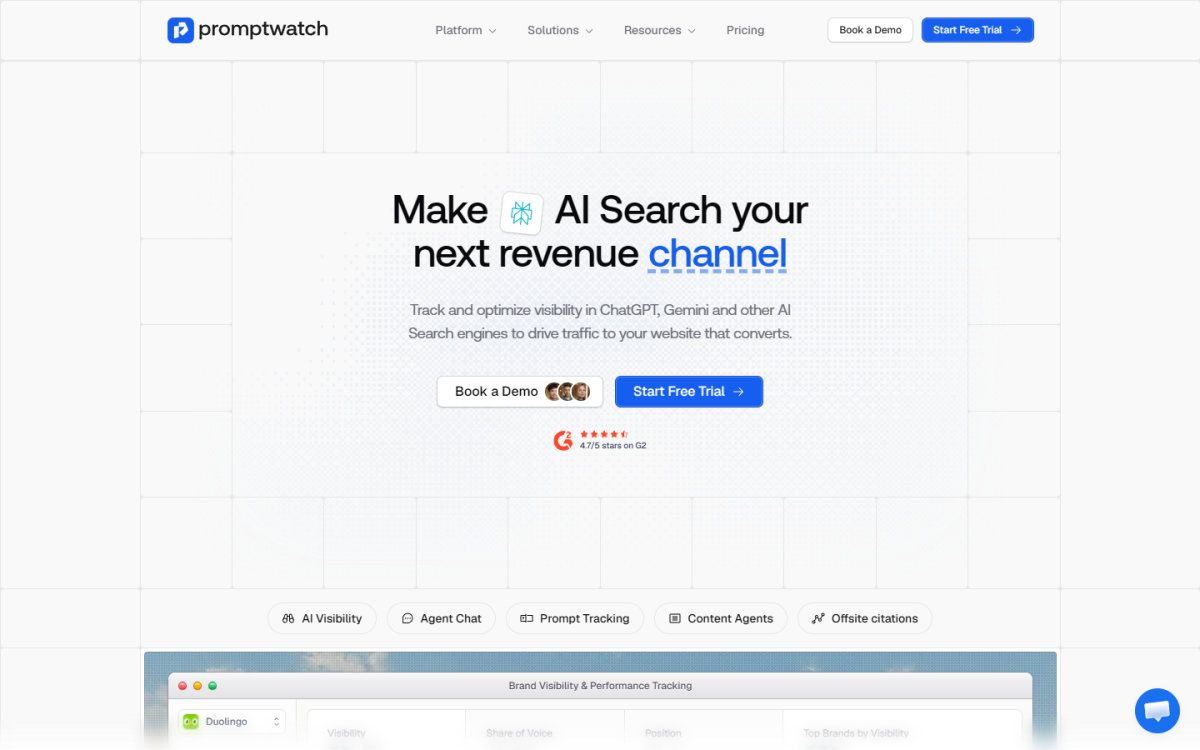
| PromptWatch | From $95/month, as of October 2026 | Yes | Not published | Not published | 50 prompts daily | $0.48 per daily tracked prompt | Prompt tracking with monthly response allowances and agency plans. |
| Goodie | From $295/month, as of October 2026 | Yes | 5 | Not published | 110 prompts daily | $0.67 per daily tracked prompt | Multi-model AI visibility tracking with an agency Growth plan. |
Prices and limits in this table are published plan details read as of October 2026. Before using a plan in a retainer margin model, verify whether its prompt allowance applies per workspace, per client, per engine, or across the full account.
Which AI Overview trackers have the lowest entry price, and what does each price tier include?
Sona AI Visibility starts from $75 per month with about 56 prompts tracked daily across three engines. Otterly.ai has the lowest published entry price in this comparison at $29 per month for 15 daily prompts across ChatGPT, Google AI Overviews, Perplexity, and Microsoft Copilot, as of October 2026.
Entry tiers work best for a defined monitoring brief, such as branded prompts, core category prompts, and comparison prompts. They become restrictive when each client needs several topics, countries, or audience segments.
- $29–$79 range: Sona AI Visibility starts from $75 per month with about 56 daily tracked prompts across three engines, while Otterly.ai starts at $29 per month with 15 daily prompts.
- $95–$189 range: Sona AI Visibility provides a lower entry point at $75 per month, while Peec AI and PromptWatch each start at $95 per month with 50 daily prompts. Otterly.ai Standard is $189 per month.
- $199–$500 range: Sona AI Visibility agency plans start at $199 per month with one workspace per client and white-label reports. Peec AI agency plans start at $245 per month, while Scrunch AI Agency Core is $500 per month with white-label capabilities.
Engine coverage should follow client demand. A local B2B service client with Google-led discovery needs a different watchlist than a software client whose buyers research vendors across multiple answer engines.
What does a realistic small-agency workload of 100 recurring prompts cost per month?
A realistic workload of 100 recurring prompts costs about $97–$189 per month in published plans that cover 100 daily prompts across ChatGPT, Perplexity, and Google AI Overviews, as of October 2026. That workload fits one substantial client or a tightly controlled portfolio of smaller accounts.
Do not treat 100 prompts as 100 isolated keywords. An agency needs room for branded questions, category questions, alternatives, use cases, integrations, pricing, and buyer-stage comparisons. A client with three services and two buyer segments can use that capacity quickly.
- Build a prompt list around commercial topics, not only high-volume informational queries.
- Assign prompts to one client and one landing-page owner.
- Run the same prompt list daily.
- Review the movement monthly with the client, then revise the strategic prompt set quarterly.
Running the same prompt list daily reveals patterns that a weekly snapshot can obscure. The resulting log distinguishes sustained movement from a volatile answer that would otherwise create unnecessary client work.
When does a $29–$59 plan stop being enough, and which agency features cost extra?
A $29–$59 plan stops being enough when an agency needs several client workspaces, more than a narrow daily prompt list, or client-ready reporting. Sona AI Visibility lists agency plans from $199 per month, billed annually, with one workspace per client and white-label reports. Otterly.ai lists Standard at $189 per month and Premium at $489 per month, while Scrunch AI lists Agency Core at $500 per month with white-label capabilities, as of October 2026.
The budget change is operational, not cosmetic. Agency pricing covers distinct client data, reporting without manual spreadsheet work, and enough prompts for multiple service lines or regions.
- Separate workspaces: Needed when each client requires its own prompts, competitors, markets, and reporting history.
- White-label reports: Needed when reports are delivered under the agency brand rather than as analyst exports.
- Additional users: Needed when account managers, SEO specialists, and analysts require access.
- More prompt capacity: Needed when retainers include multiple categories, locations, or products.
The correct upgrade point arrives when manual client separation or reporting consumes more billable time than the plan upgrade costs.
Can an AI Overview tracker be trusted when results change so often?
An AI Overview tracker is trustworthy when it measures the same prompts consistently and treats results as a time series rather than a permanent ranking. AI answers change with retrieval indexes, model updates, location, language, personalization, and newly published competitor material.
Daily monitoring suits a recurring prompt list. A change that holds for four days is a trend. A one-day spike is noise until it persists. Sona AI Visibility offers daily prompt tracking on Starter, alongside PromptWatch and Otterly.ai, as of October 2026.
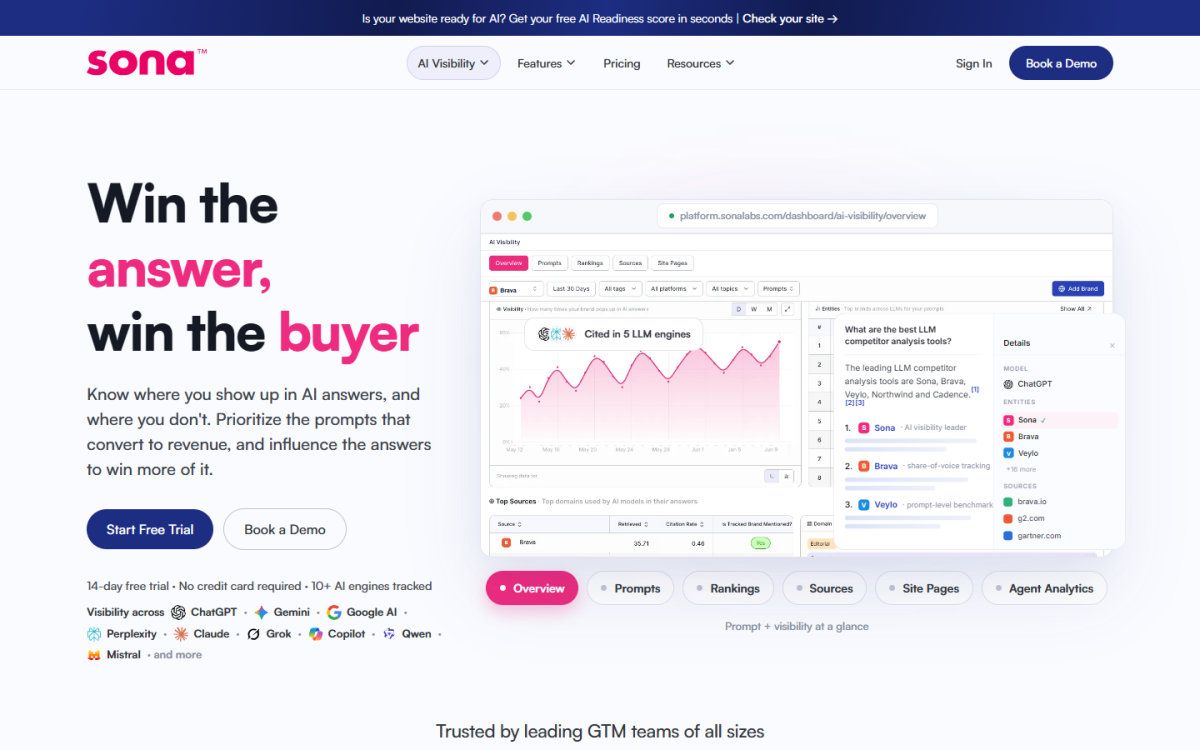
Sona's own AI visibility data, September 2026, covers 8 answer surfaces: ChatGPT, Google AI Overviews, Perplexity, Google AI Mode, Gemini, Mistral, Qwen, and Claude. That spread shows why agencies should document the engine, country, language, and prompt wording behind each client finding.
Use a separate clock for technical work. Prompt lists run daily, while a full technical review and competitive benchmark belong in a monthly or quarterly operating cycle. A dated score starts the conversation, but a comparable series shows whether client visibility moved.
Does tracking more AI engines give an agency more insight or just more noise?
Tracking more AI engines gives an agency more insight only when each engine represents a real client research surface. Extra engines create noise when the agency has no audience evidence, reporting need, or content decision attached to the results.
Start with Google AI Overviews if the client’s search program is Google-led. Add ChatGPT, Perplexity, Gemini, Claude, and other answer engines when buyers use them for vendor research, product comparisons, or technical evaluation.
- Identify the answer engines named in client sales calls, attribution forms, and support conversations.
- Track the same commercial prompt cluster across those engines.
- Compare cited sources and client pages, not only brand mention totals.
- Remove engines that produce no actionable client decision after a reporting cycle.
Engine count is not a quality score. The useful question is whether a new engine changes a recommendation about content, technical access, source coverage, or commercial prompt priorities. A focused four-engine monitoring program can be more useful than a broad dashboard that no account manager reviews.
How can an agency connect AI visibility to leads and revenue?
An agency connects AI visibility to leads and revenue by joining prompt and citation data with AI-referred visits, form data, CRM accounts, pipeline stages, and closed-won revenue. Mention monitoring identifies where a client appears. Attribution determines whether those appearances contributed to commercial activity.
Preserve the evidence chain. Record the prompt, engine, cited client page, referral visit, account, conversion event, opportunity, and revenue outcome. Self-reported attribution fields on demo and signup forms also matter because AI research does not always produce a measurable click.
Sona AI Visibility Growth adds AI search attribution. That evidence distinguishes a highly visible informational prompt from a lower-volume commercial prompt associated with qualified pipeline.
Report both diagnostic and business metrics. Diagnostic metrics include visibility, cited pages, and source patterns. Business metrics include AI-referred visits, identified accounts, conversion events, pipeline, and revenue. Neither set replaces the other.
Who should not buy a low-cost AI Overview tracker?
Low-cost AI Overview trackers are a poor fit for agencies that need to prove client revenue impact, manage complex multi-country programs, or operate separate reporting workflows for many accounts. They are monitoring products first, and monitoring alone does not settle attribution or retainer value.
A small plan also fails agencies that cannot maintain a recurring prompt list. A dashboard without a prompt taxonomy, page owners, and a review process becomes another monthly export without client action.
- Do not buy a low-cost tracker for a one-time audit with no ongoing reporting cadence.
- Do not buy one as a substitute for CRM, web analytics, or conversion measurement.
- Do not buy one if every client requires white-label reports and isolated workspaces from the first month.
- Do not buy one if the agency cannot explain why each tracked engine matters to a client audience.
Monitoring which AI answers mention a brand is only half the job. The other half is connecting those mentions to accounts, pipeline, and revenue.
What are the frequently asked questions about AI Overview tracking?
What is the cheapest AI Overview tracker for a small agency?
Sona AI Visibility starts from $75 per month and connects AI citations and prompts to pipeline and revenue. The lowest published entry price in the approved pricing set is Keyword.com from $9.80 per month, as of October 2026, although its AI limits are sold as credits and daily prompt frequency is not published. Otterly.ai starts at $29 per month with 15 daily prompts. The cheapest sticker price is not the cheapest per client once prompt capacity, workspaces, and reporting requirements are counted.
How much should a small agency budget for AI visibility tracking?
Core monitoring for small agencies and consultants starts within the $29–$99 monthly range, as of October 2026. Agency tiers with broader prompt capacity or reporting features start at $189 per month and reach $500 per month in the published plans reviewed here.
Do cheap AI trackers cover Google AI Overviews, ChatGPT, Perplexity, and other answer engines?
Sona AI Visibility tracks Google AI Overviews, ChatGPT, and Perplexity, and connects AI citations and prompts to pipeline and revenue. Several low-cost trackers also cover those engines. Otterly.ai lists ChatGPT, Google AI Overviews, Perplexity, and Microsoft Copilot at $29 per month, as of October 2026. Check coverage against where each client’s audience researches.
Are white-label reports included in low-cost AI tracker plans?
White-label reporting is often separate from the lowest monitoring tier. Scrunch AI lists an Agency Core reporting tier with white-label capabilities at $500 per month, as of October 2026. Agencies should budget separately for core monitoring, multi-client operations, and branded reporting.
Can an AI Overview tracker prove that visibility produces leads?
A standalone AI Overview tracker shows whether a brand appears in AI answers, but it does not establish commercial impact by itself. Pair monitoring with branded search, referral traffic, conversion, CRM, and sales data, or use Sona AI Visibility to connect prompts and citations to pipeline and revenue.
How often do AI Overview trackers refresh their results?
Refresh cadence varies by tool and plan. Some plans run recurring prompts daily, while other products publish weekly or unspecified refresh schedules. Location, device, language, personalization, and model behavior also affect results, so agencies should document testing conditions and use daily prompt monitoring for recurring client watchlists.
Summarize this article with AI: ChatGPT · Claude · Perplexity · Google AI Mode
Last updated: October 2026